


7 Mistakes You're Making with Your Oil Mist Collector (and How to Fix Them)
Oil mist collectors only do their job when the application, airflow, filtration stages, and maintenance plan match what’s happening on the shop floor. High-speed CNC, modern coolant chemistries, warm enclosures, and 2–3 shift schedules can push a system past its design point fast: then you get haze, odor, residue, and filter spend that looks “mysteriously” out of control.

Below are seven common mistakes that show up in machine shops and production facilities, plus practical fixes that improve capture efficiency, reduce housekeeping, and support OSHA-aligned exposure control plans.
1) Treating “Visible Haze” as Normal
What it looks like
- A light fog around machines during heavy roughing or high RPM finishing
- Oily film on machine windows, control panels, or nearby racking
- Slippery floors around the cell, even with “good” housekeeping
Why it happens
Visible haze usually means the collector isn’t capturing the fine aerosol fraction. Many operations generate submicron droplets that pass through coarse media or overloaded stages. It can also mean airflow is low (plugged prefilter, blocked intake screen, duct restriction) and the mist is escaping before it ever reaches the collector.
How to fix it
- Confirm the contaminant type: oil mist vs oil smoke vs mixed particulate. Smoke (thermal breakdown) behaves differently than mist (aerosol droplets) and often needs higher-efficiency final filtration and/or additional stages.
- Verify actual airflow at the machine connection: don’t rely on fan nameplate CFM. Use a hood traverse or inline measurement where possible.
- Match filtration to particle size: multi-stage designs (mesh/coalescing + high-efficiency final) are typically required for fine aerosol control.
- Check enclosure sealing: if the machine enclosure is leaking, you’re trying to capture a moving target.
2) Running with Saturated Prefilters (or the Wrong Prefilter)
What it looks like
- Prefilters dripping, collapsing, or deforming
- Filters “plug” quickly and the unit loses draw
- Oil carryover downstream (final stage loads early)
Why it happens
Prefilters are often treated as optional, but they do the bulk separation and protect your expensive stages. If the prefilter media is wrong for the coolant/oil type, or it’s left in service too long, it becomes a restriction: and then the collector’s fan curve puts you into low-flow operation.
How to fix it
- Set a prefilter inspection cadence: weekly visual checks are normal in high-utilization CNC environments; monthly is often too slow.
- Stock the correct media: coolant type (synthetic/semi-synthetic/straight oil), temperature, and mist loading all affect which prefilter/coalescing media performs best.
- Install differential pressure (DP) gauges where possible: DP trending is the simplest “early warning” that you’re losing airflow.
- Avoid “cheap” substitutes: incorrect thickness or low coalescing performance can shift loading to the final filter and spike consumable cost.
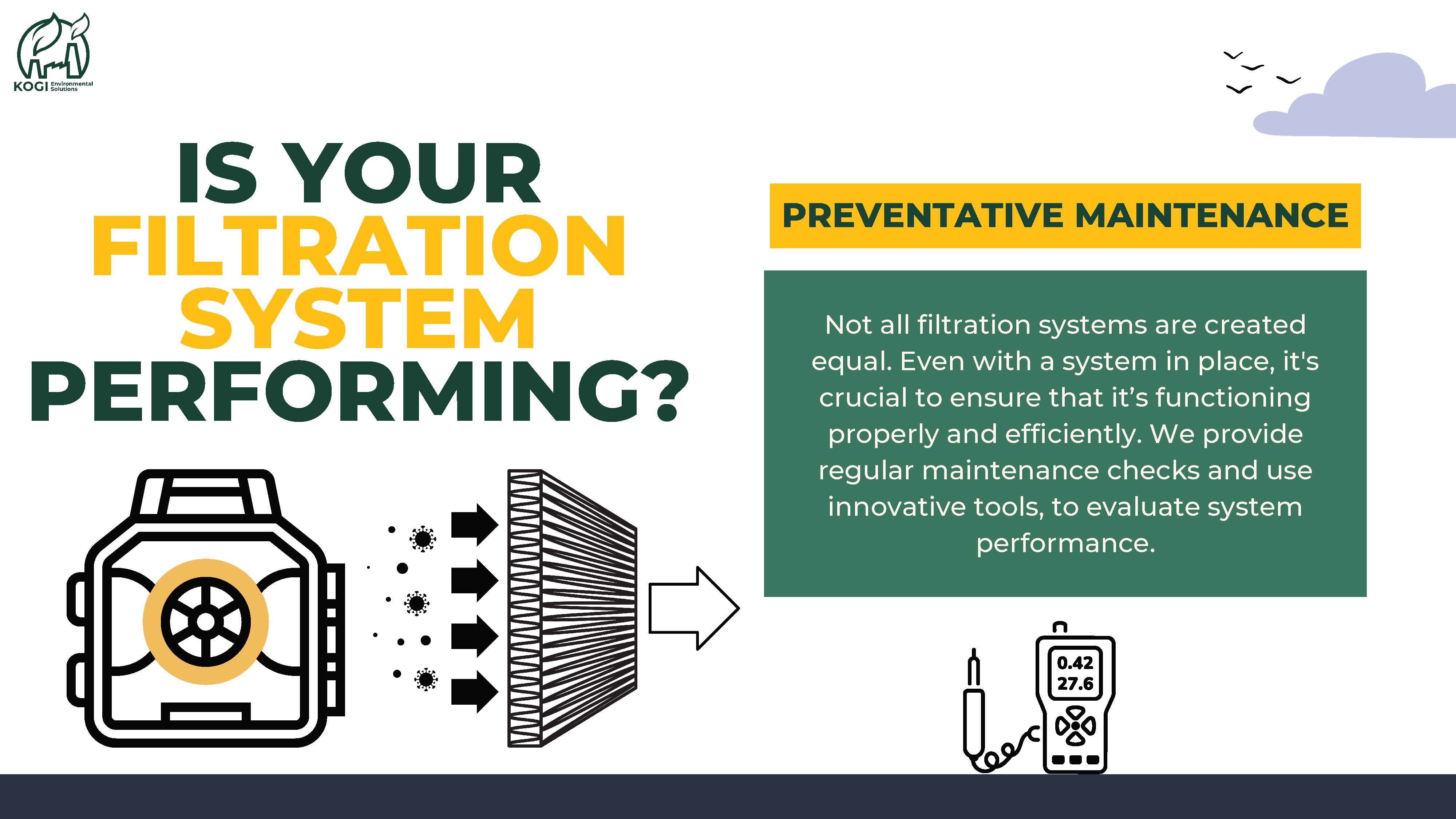
3) Ignoring Static Pressure & Filter DP Until There’s a Problem
What it looks like
- Operators complain the machine “smells like coolant again”
- Collector sounds different (fan strain), or vibration increases
- Sudden jump in filter changes without a process change
Why it happens
Oil mist collection is an airflow-and-resistance system. Filters load, resistance increases, airflow drops, capture velocity falls, and mist escapes. If you don’t track static pressure or DP, you end up doing reactive maintenance: and you usually find out after residue has already coated the area or electronics.
How to fix it
- Trend DP, not just filter dates: set a baseline DP with new filters, then log readings. A steady upward slope is normal; sudden spikes point to upstream issues (blocked inlet, coolant carryover, damaged prefilter).
- Define “change-out DP” per stage: follow the manufacturer’s guidance for each filter stage and fan capability. Changing too early wastes money; too late reduces capture and increases housekeeping.
- Add simple monitoring: even a basic magnehelic gauge is better than guessing; smart monitoring is ideal when uptime matters.
4) Undersizing the Collector After Production Changes
What it looks like
- “It used to work fine” but now there’s haze/odor
- More machines added to a manifolded system
- Higher coolant flow, higher RPM tooling, longer cycle times, more shifts
Why it happens
Mist generation scales with process intensity. Adding a second shift or increasing spindle speed can push mist load beyond the collector’s design. Ducted systems get hit twice: more loading and more resistance as branches are added or modified.
How to fix it
- Re-rate the system when anything changes: machines, enclosures, coolant, shifts, or duct routing.
- Check fan curve vs new operating point: a collector that can “move 1200 CFM” at low static pressure may not deliver that airflow at your actual system resistance.
- Avoid over-manifolding without engineering: too many drops on one trunk can create imbalance where the closest machine gets all the airflow and the farthest gets none.
- Consider dedicated collectors for high-output machines: especially for large enclosures or processes with frequent door openings.
5) Venting Recirculated Air Without Confirming Final Filtration & Compliance
What it looks like
- Air is returned to the shop for heat savings, but odor persists
- Workers report irritation near certain machines
- Quality issues (mist settling on parts, metrology equipment, optics)
Why it happens
Returning air to the facility can be a smart HVAC move, but only if the final filtration matches the contaminant. Fine aerosol and smoke can slip through marginal filtration. Odor can also persist even when visible haze is gone, depending on coolant chemistry.
How to fix it
- Confirm your filtration stack: coalescing + high-efficiency final is common; odor control may require activated carbon depending on the source.
- Validate performance at the discharge: spot-check particulate/mist indicators where practical and compare to internal EHS targets.
- Follow a documented exposure control plan: OSHA compliance is typically built around controlling exposure and documenting the method: capture at the source, maintain the system, and verify it’s working.
- If you can’t verify, don’t recirculate: exhausting outdoors may be the safer interim step until the system is corrected (subject to local requirements and facility constraints).
6) Skipping Drainage, Return Lines, and Housekeeping Around the Collector
What it looks like
- Puddling in the collector base
- Oil leaks at seams, doors, or drain fittings
- Wet filters and rapid DP increase
- Slick floors around the unit or saturated sound attenuation
Why it happens
Coalesced oil has to go somewhere. If the drain is plugged, poorly pitched, or routed incorrectly, collected fluid re-entrains into the airstream and loads filters. In ducted systems, poor slope or lack of drainage points can create low spots where coolant pools.
How to fix it
- Verify drain function weekly: open/close valves, check for sludge, confirm flow to the return or waste container.
- Check pitch and traps: drain lines need proper slope and routing; avoid sagging hose runs that create “U-traps” of coolant.
- Add a routine for sludge management: some coolants create sticky residues that gradually restrict drains and screens.
- Inspect door gaskets and latches: leaks aren’t just messy: they indicate bypass that reduces effective filtration.
7) Treating Oil Mist Collectors as “Set-and-Forget” Equipment
What it looks like
- No spare filters on hand; rush orders and downtime
- No written PM checklist; maintenance is tribal knowledge
- Same service interval for all machines, despite very different loading
- No record of filter life, DP, or recurring failures
Why it happens
Mist collectors are often installed during a machine purchase, then ownership gets fuzzy: production assumes maintenance is watching it, maintenance assumes production will call when it smells bad. Without a basic PM program, you lose airflow slowly and normalize the decline.
How to fix it
-
Create a simple PM standard:
- Weekly: inspect inlet screen, prefilter condition, drains, and visible residue
- Monthly: record DP/static pressure, check fan/vibration, inspect door seals
- Quarterly: verify airflow where feasible; review filter consumption vs baseline
- Keep spares matched to your model: stocking the correct prefilters and final filters reduces emergency downtime and avoids “close enough” substitutions.
- Document changes that affect loading: coolant changeovers, new tooling, increased RPM programs, or enclosure modifications.
- Use manufacturer manuals and service bulletins: correct filter orientation, sealing surfaces, and torque/latch settings matter more than most teams expect. Reference documentation can be stored or shared internally from resources like KES Manuals when needed: https://www.kogi-es.com/blogs/manuals
Quick Diagnostic Checklist (Print-Ready)
Use this to isolate whether you have a filtration problem, airflow problem, or application mismatch:
- Haze at the machine door or top gaps: airflow/capture issue or enclosure leakage
- Oil film on nearby surfaces: fine aerosol bypass, low airflow, or overloaded final stage
- Odor with no haze: chemistry/odor control issue; consider carbon stage and verify airflow
- Prefilter dripping or collapsing: drainage failure or wrong media
- DP climbs abnormally fast: prefilter failure, high loading event, blocked inlet, re-entrainment
- One machine is bad on a manifold: duct balance issue or excessive branch static pressure
When to Escalate Beyond “Filter Changes”
If any of the below are true, the fix is typically engineering and service: not just consumables:
- Production increased (more shifts, more machines, higher spindle speeds) and the collector was never re-rated
- You’re seeing repeated short filter life even after confirming correct part numbers and installation
- Ducting has grown organically without balancing or static pressure review
- You need to recirculate air for HVAC cost control but can’t verify discharge quality consistently
For reference material on equipment types, filtration options, and service coverage, Kogi Environmental Solutions maintains line cards and related documents here (useful for standardizing parts across multiple sites):
- Line Cards: https://www.kogi-es.com/blogs/line-cards
- Related Articles: https://www.kogi-es.com/blogs/related-articles